
Texas still pictures itself as young and fast-growing. The latest demographic data says that’s only half right, and the half that’s changing lands squarely on how the region will care for people as they get older.
In May 2026, the policy group Texas 2036 worked through the Census Bureau’s newest population estimates and laid the shift out plainly. Texas hit 31.7 million residents by mid-2025, but its growth is slowing and its median age is climbing toward the mid-forties over the coming decades.
The corridor effect
Where that aging population lives matters as much as how big it gets. The same analysis found that 87% of Texans live east of the I-35 corridor, packed into the metro triangle anchored by Dallas, Houston, San Antonio, and Austin.
That corridor isn’t an abstraction to the towns sitting on it. Kyle, Buda, San Marcos, and New Braunfels ride Interstate 35 between Austin and San Antonio, absorbing both the metros’ growth and the aging that comes with a maturing suburban ring. Texas 2036 notes that the growth increasingly happens at the suburban and exurban edges rather than in the dense cores. Those edge communities skew toward families and retirees who bought in for space and affordability, and who plan to stay. Texas 2036 projects the state drifting toward what demographers call “ultra-aged” territory in the decades ahead, with the 65-and-older share climbing steadily instead of leveling off. A slice of that older population is landing in exactly these corridor suburbs.
Why aging in place changes dental demand
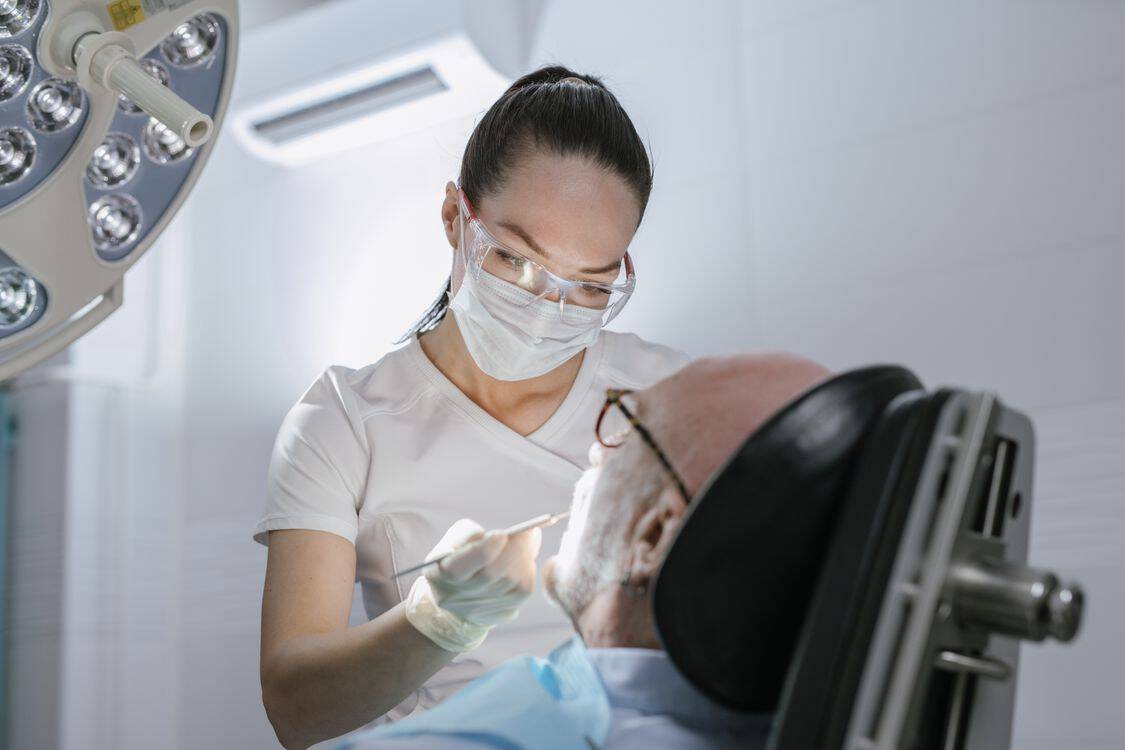
An older population that stays put generates steady, local demand for services that used to cluster in big-city specialty centers. Tooth loss is one of the clearest cases.
The link is simple. Rates of partial and complete tooth loss climb with age, and the generation now moving through its sixties and seventies is far less willing to settle for removable dentures than its parents were. Many watched a relative fight a slipping plate at the dinner table and decided they wanted something that stays put.
That expectation runs straight into geography. A retiree in a town south of Austin doesn’t want to drive into the city for a year of appointments. Demand pools locally, and the providers who can handle complex restorative work close to home are the ones who catch it. Texas 2036 frames the broader pattern as a workforce and services problem stretching across health care, and dental care is a quiet piece of it. As the share of residents over 65 rises, the volume of restorative dentistry rises with it.
A slower-growing, older market
Here’s the counterintuitive part. Slower overall population growth doesn’t mean slower demand for age-related services. Often it means the reverse, because the makeup of the population keeps tilting older even as the headcount climbs more gently.
For the corridor towns, that reads as a durable, structural rise in the need for tooth replacement, bone-preservation work, and the upkeep that fixed restorations ask for. It isn’t a trend that flips with the next economic cycle. The math also explains why implant-focused practices have been opening in mid-sized Texas communities instead of clustering only inside Austin or San Antonio. The patients are where the corridor put them, and increasingly they expect to find care without leaving it.
None of this settles what any one person should choose. Candidacy still comes down to bone, health, and circumstance. But the wide-angle picture is fixed: an aging corridor produces rising, localized demand for permanent tooth replacement, and Central Texas is one of the clearest examples in the country.