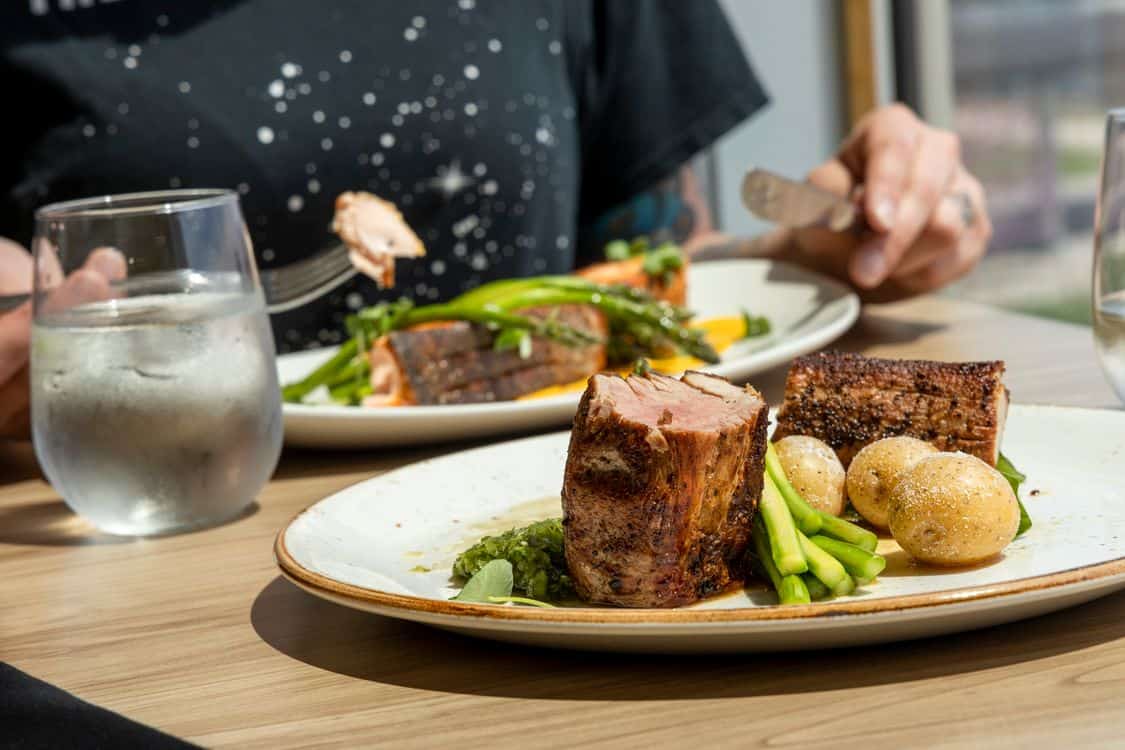

The question sounds almost trivial until it is your dinner. Can you actually eat a steak with dentures? For a great many denture wearers, the honest answer is a quiet no, or at least a frustrating maybe.
That limitation is not a matter of willpower or getting used to the appliance. It is mechanical, and the research measuring it is unusually clear.
Understanding why traditional dentures struggle with tough foods explains a lot about why so many wearers end up eating around their own teeth.
The Force Gap Nobody Mentions at Fitting
Chewing is a contest of force, and dentures lose it. Natural teeth generate substantial bite pressure. A conventional complete denture delivers a small fraction of that, and the gap is wide enough to change what a person can realistically eat.
A clinical study comparing conventional dentures with implant-supported overdentures quantified the difference in a memorable way. It reported that denture wearers need roughly seven times more chewing cycles to break food down to the same degree as people with natural teeth.
Seven times the effort to achieve the same result. That is the lived reality behind the polite phrase difficulty with certain foods.
Tough, fibrous items are where it shows most. Steak and other dense meats, raw vegetables, crusty bread, and anything that requires sustained shearing force are precisely the foods a low-force appliance handles worst.
The underlying numbers are stark. Where natural teeth bring a chewing load in the range of 200 newtons to the task, the forces a complete-denture wearer can muster often fall to somewhere between 60 and 80. That is not a small shortfall. It is a different category of capability.
Many wearers reach for adhesives to close the gap, but that is a workaround with its own costs. The pastes can alter how food tastes, need constant reapplication, and still do not restore the force that the missing bone foundation used to provide.
There is a digestive angle that often goes unmentioned. Chewing is the first stage of digestion, and food that arrives in the stomach poorly broken down asks more of everything downstream. The consequences of a weak bite do not stop at the plate.
Why the Problem Compounds Over Time
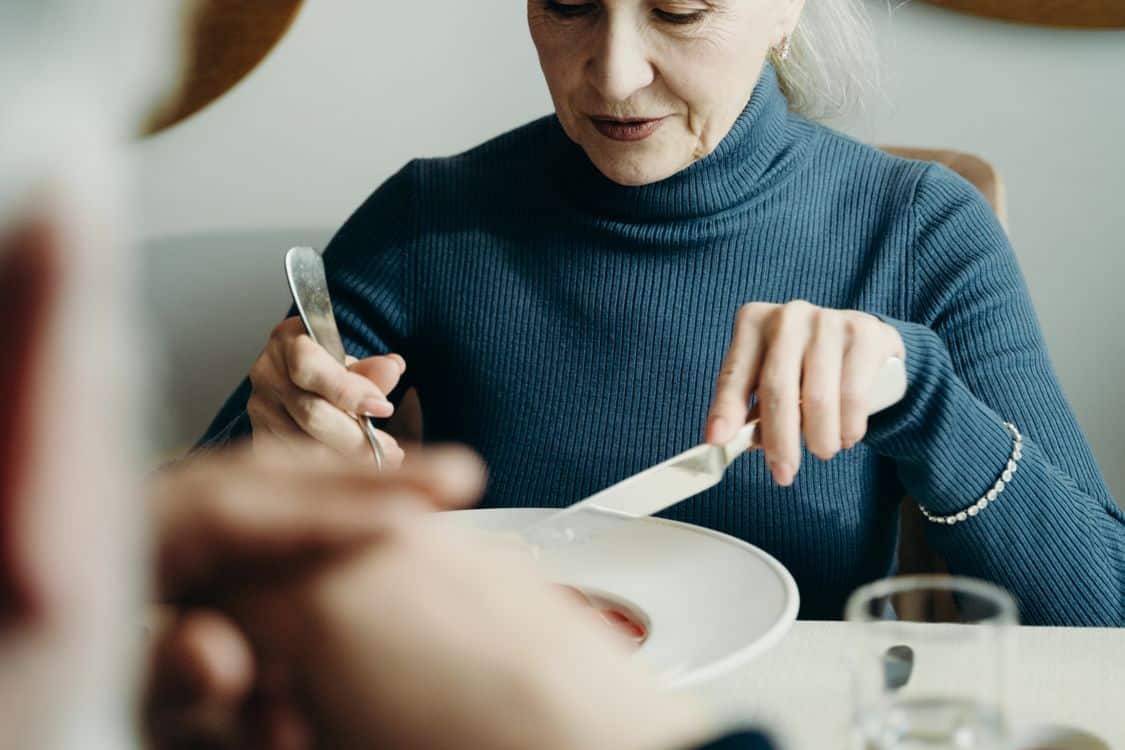
The force gap is not static. It widens, because the bone under a traditional denture keeps resorbing after the teeth are gone, and less bone means less support and less chewing pressure.
That is why dentures loosen with age and why a plate that managed a chicken breast a few years ago may struggle with it later. The foundation is eroding underneath.
A loose denture also brings movement into the equation. Dentures shift during chewing because the surrounding muscles dislodge them, so wearers brace, slow down, and avoid the foods most likely to break the seal.
The predictable response is a retreat to soft, easy foods. That keeps mealtimes manageable but narrows nutrition, often toward more processed options that ask less of the bite.
That retreat carries health costs that compound quietly. A diet skewed toward soft, processed foods tends to be denser in refined carbohydrates and lighter in the fiber, lean protein, and fresh produce that require real chewing. Over years, eating around your own teeth can nudge weight and nutrition in the wrong direction without any single dramatic moment to mark it.
How Implant Anchoring Changes the Menu
The reason implant-supported solutions come up in this conversation is that they attack the force problem at its source. Anchoring the restoration to posts in the bone restores stability the gums alone cannot provide.
That stability translates into dramatically more chewing force. Implant-supported options recover a large share of natural bite strength, enough that hard and fibrous foods move back onto the plate.
The same clinical comparisons that exposed the force gap also showed implant-retained overdentures closing much of it, with chewing efficiency and bite force landing far closer to natural dentition than conventional plates manage.
The contrast is measurable rather than impressionistic. In studies putting the same person through both kinds of appliance, conventional dentures required substantially more chewing strokes than implant-retained overdentures to reduce food to the same particle size. The implant anchoring did not just feel better. It changed the mechanics in a way you could count.
For the person whose real question is whether they will ever bite into a steak comfortably again, that is the meaningful distinction. It is not denture versus no denture. It is whether the restoration is anchored to bone or resting on a shrinking ridge.
It helps to picture what anchoring actually does. A conventional plate floats on the gums and is held only by suction and the surrounding muscles, which is why it shifts the moment real force is applied. Posts fixed into the jaw give the restoration something solid to push against, so the force a person generates goes into the food instead of into dislodging the appliance.
So the steak question has a real answer. With a conventional denture, tough foods will likely stay difficult and may get harder over time. With a stable, implant-anchored solution, the menu opens back up, because the force that was missing is largely restored.
Eating well is not a small thing in later life. It shapes nutrition, social life, and plain daily pleasure, and the difference between bracing through every meal and simply eating is worth understanding before settling for the appliance that asks seven times the effort.